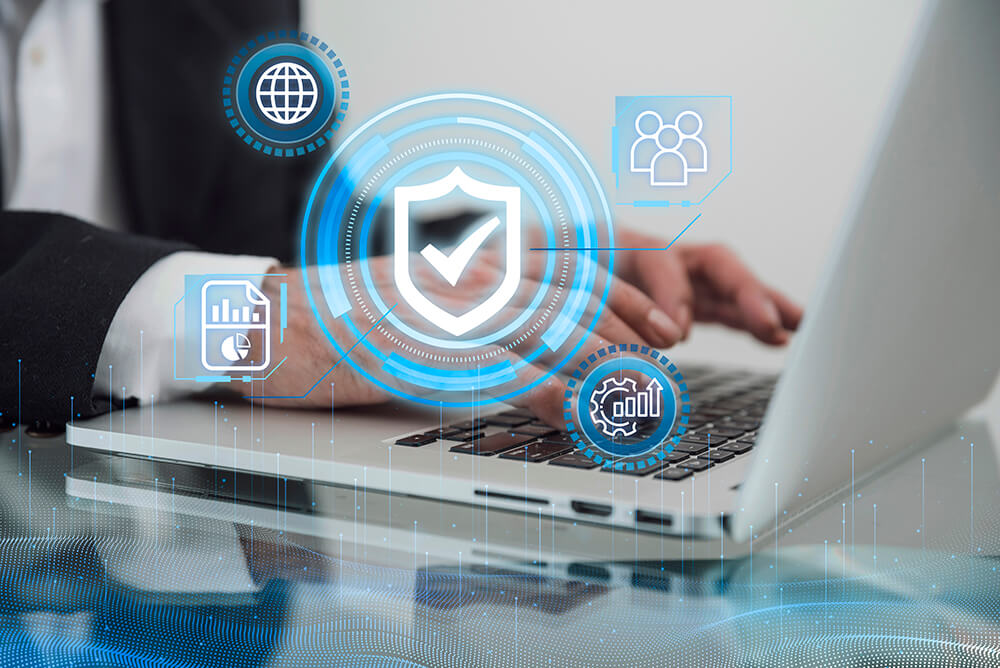
Digital activity logging and monitoring is a system that allows for the supervision, analysis, and control of the use of technological resources to prevent risks and ensure legal certainty.
Digital activity logging and monitoring is a service that combines technology and expert analysis to capture and evaluate what happens within a company’s systems.
It provides objective evidence regarding access, data usage, and behavior, facilitating incident prevention and legal compliance.
It is recommended when there is a risk of information leakage, a need for internal control, or legal requirements.
This service is key if:

It includes technological implementation, continuous activity logging, and expert analysis to detect real risks.
It allows for the logging and analysis of the actual use of systems, data, and tools within the company.
The following are monitored:
“The best option for preventing information leaks is to implement a monitoring system before an incident occurs.”

The most effective way to avoid data leaks is to identify, monitor, and control access to sensitive information.
The system allows for the detection of unauthorized copying, sending, or extraction attempts, reducing both accidental and intentional risk.
Identify critical and sensitive information
Monitor access and data movements
Detect anomalous behavior
Log risky actions
Act before an information leak occurs
It helps prevent incidents, improve internal control, and provide legal evidence for any situation.
“The most effective way to protect sensitive data is to control its use in real time, not just protect access.”

It is recommended to implement systems that comply with regulations and respect employee rights.
“Monitoring is legal when it is proportional, informed, and justified by risk.”
It is used to prevent leaks, improve internal control, and provide evidence in case of conflicts.

Structured activity logging allows for the generation of valid evidence for audits, conflicts, or legal proceedings.
If you don’t know what’s happening inside your systems, you have a risk you can’t control.
Most internal incidents are detected late, when the damage is already done.
Monitoring allows you to anticipate, detect signals, and act with real data.
If you need to evaluate the level of control and risk in your organization, you can request a consultative meeting to analyze your situation and define the most appropriate approach.
Yes, as long as it is done in accordance with regulations and with criteria of proportionality and transparency.
Yes, it allows for the detection and prevention of unauthorized access or misuse of data.
Yes, if implemented correctly, they have evidentiary value.
No, on the contrary, it allows for identifying improvements and optimizing processes.
It is not always mandatory, but it is highly recommended in regulated environments.
This service monitors internal behavior, not just external threats.
If you need to prevent information leaks, improve internal control, or have evidence for incidents, you can request a consultative meeting.
It is recommended to have specialists implement the system in a secure, legal way adapted to your organization, ensuring both the protection of the company and legal certainty.